
Food Quality in Uruguay: Fruits & Vegetables
Discover the food quality and affordability of fruits and vegetables in Uruguay. Learn where to shop, what’s in season, and how expats enjoy fresh produce year-round. A must-read for anyone moving to or traveling in Uruguay.
One of my favorite aspects of living abroad in Uruguay is the excellent food quality, especially when it comes to fruits and vegetables. I have peace of mind when feeding my family home cooked meals here. I appreciate and value Uruguay for having a thriving agricultural industry with high quality, nutritional, and non-GMO production.
While Uruguay is world-renowned for their beef, you don’t have to be a Carnivore or meat-eater to eat well and comfortably in Uruguay. I personally know a few local Uruguayans and other expats in Uruguay who are vegetarian or vegan and thrive here with the abundance of high-quality fruits and vegetables. Whether you are traveling through or living in a large city or small town in Uruguay, it is guaranteed you can find tasty, fresh, high quality, affordable locally grown produce.
Food Security and Food Quality in Uruguay
Uruguay is a global leader in food production and food security. This small South American country produces enough food to feed up to 9X times its population, making it one of the most efficient agricultural producers in the world. For anyone considering moving to Uruguay or exploring its production or sustainable food systems, this is a major advantage. As highlighted on the official Uruguay XXI government site, Uruguay is internationally recognized as a top food exporter and a model of reliable, high-quality food production. This level of food self-sufficiency screams food security to me and is one of the many reasons I deeply value living in this beautiful country.
Where to Buy Fresh, Quality Fruits and Vegetables in Uruguay
You can find the most beautiful, vibrant produce at the local neighborhood produce stand or verdulería, weekly neighborhood farmer’s markets or férias, and supermarkets or supermercados. Keep in mind that some of the verdulería and férias are cash-only and others offer a debit card option, so it is good to be prepared and carry both.
What $15 Gets You at a Uruguayan Produce Stand
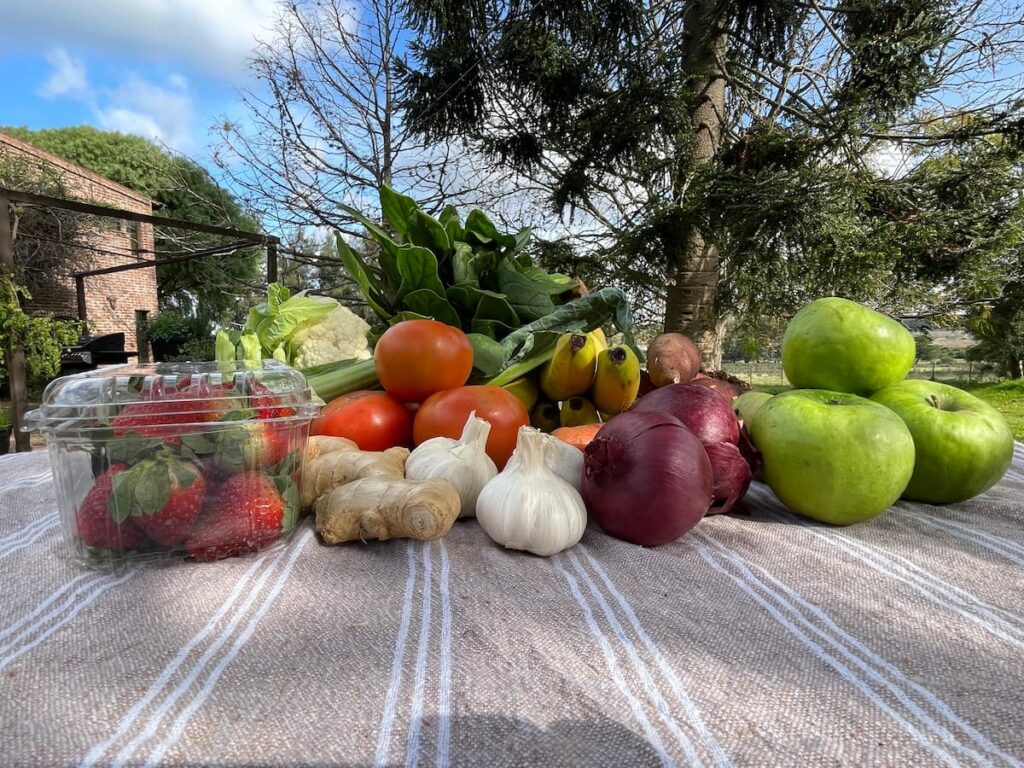
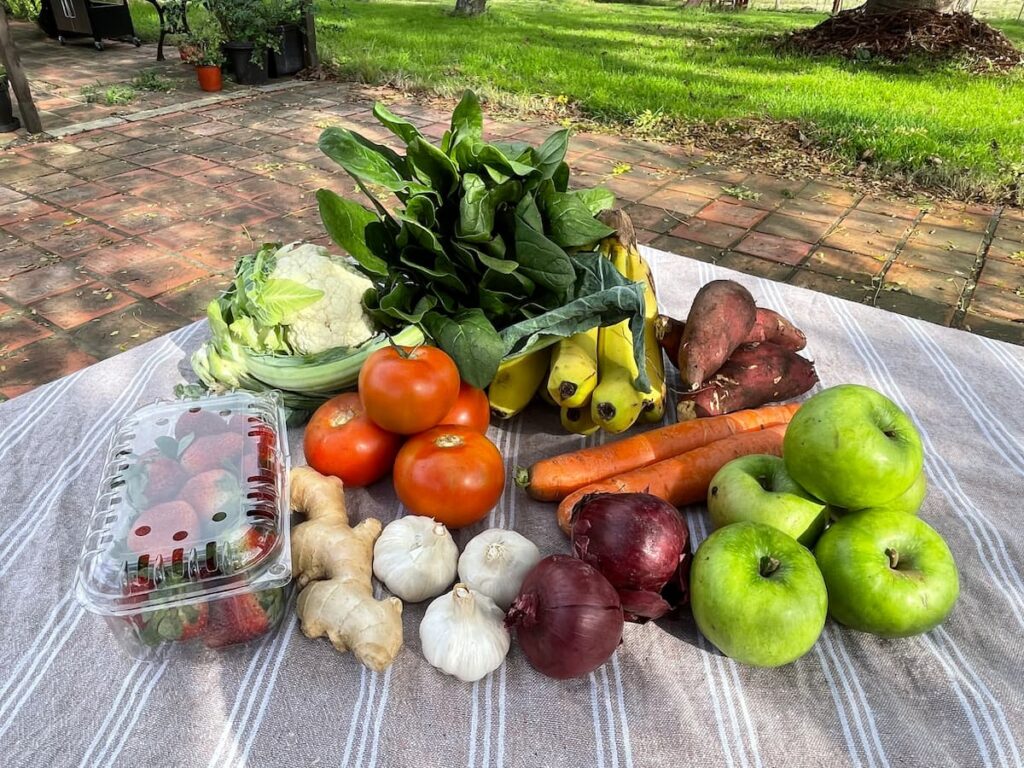
Here’s a look at my latest produce haul from my local verdulería in Uruguay. I spent just 630 Uruguayan Pesos (approximately $15.17 USD as of June 8, 2025)—a great deal for fresh, seasonal fruits and vegetables during the Uruguayan winter. This is a perfect example of the affordable cost of living in Uruguay, especially when it comes to shopping at neighborhood produce markets. Here’s what I got for under $16 USD!
- 6 Bananas
- 5 Apples
- 4 Tomatoes
- 3 Sweet Potatoes
- 3 Heads of Garlic
- 2 Large carrots
- 2 Red Onions
- 1 Ginger
- 1 pack of strawberries
- 1 head of cauliflower
- 1 Bunch of Spinach
Local Markets vs. Supermarkets in Uruguay for Fresh Quality Food: Fruits & Vegetables
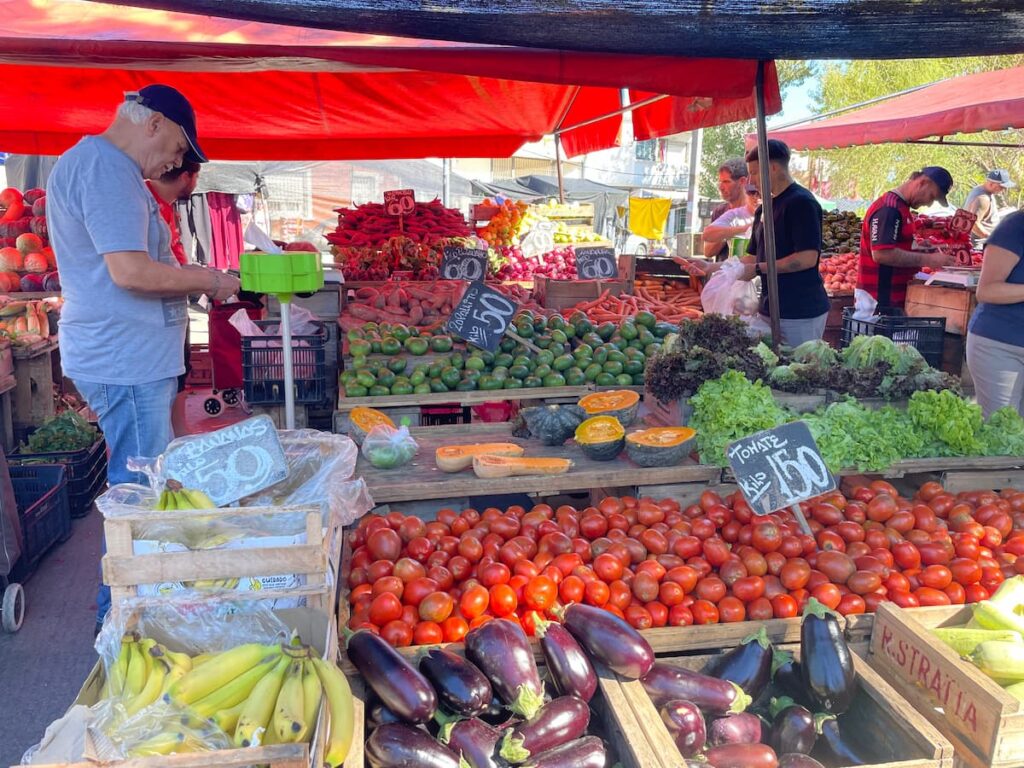
The férias are your cheapest and best budget-friendly option for buying your produce. Verdulerías are on the mid to lower range, and supermarkets such as Devoto, Disco, Tienda Inglesa, Geánt, Ta-ta, & the Fresh Market chains are on the higher end being the most expensive option. Most locals prefer to shop at the férias or verdulerías.
As an expat who moved from Southern California where I routinely attended my Saturday morning neighborhood farmer’s market, it was refreshing to see and experience the affordability of fresh, locally-sourced produce at the férias. Unlike California, where I was paying $10 for a pack of strawberries, here you can find them at a fraction of the price during the right season.
The luxury of living in or around Montevideo is that you can find or stumble upon a féria every day of the week. They are spread out around the city and rotate throughout the different neighborhoods. If you live outside of the city in a smaller town or rural areas, férias are typically held on Sundays.
Budget hack: On days where there are férias, some of the nearby supermarket chains such as Devoto or Tienda Inglesa have the produce discounted by up to 30%-40%. They do this to compete with the local férias. So if you’re looking for a one-stop shop grocery experience, timing it for the produce section discount is a better option for you.
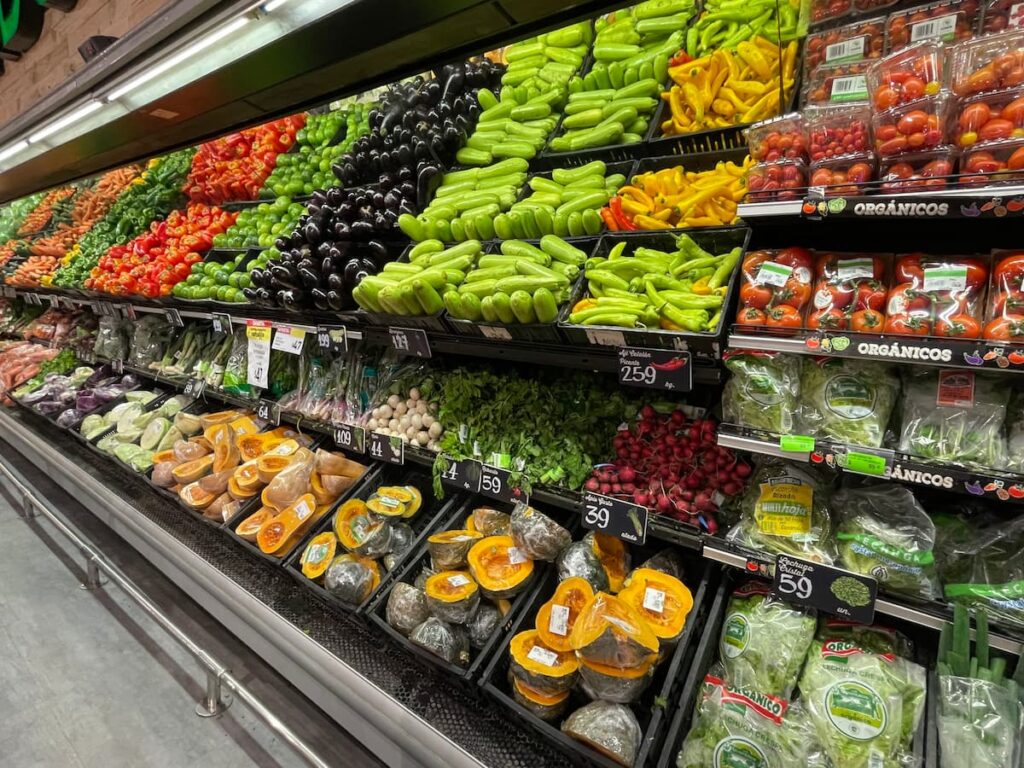
The most expensive produce will be at the larger supermarkets. The Fresh Market supermarket chains around Uruguay like Devoto, Disco, or Geant have beautifully displayed produce. They also have imported produce such as mangos, plantains, and papayas These are typically more expensive than the locally grown options and are considered “exotic” produce in Uruguay.
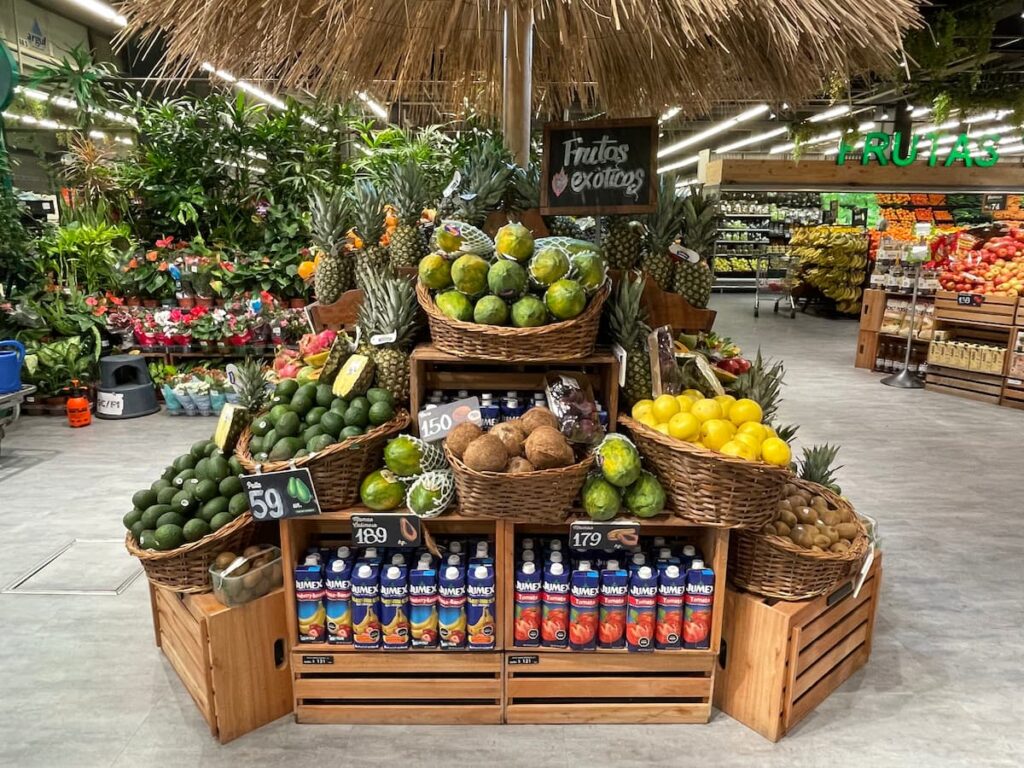
It’s important to note that the variety and selection of produce in Uruguay isn’t as broad as in the U.S. Availability is highly seasonal, and you may not be able to find the exact fruit or vegetable you are looking for anywhere. For example, strawberries and blueberries can be hard to come by—and pricey—outside of their growing season.
Eating Seasonally in Uruguay as an Expat
The best advice I can give to travelers, aspiring expats, or expats living in Uruguay is to eat seasonally and adapt to the local food culture. Adapting to the Uruguayan palette is honestly the best way to go. Uruguayans eat what is fresh, local, and in season, and doing the same helps keep your grocery bill down and enjoy better quality produce. Plus, it sets realistic expectations. I’ll be honest. There are times when I have craved fresh strawberries and blueberries and I literally couldn’t find them anywhere. They were either impossible to buy at the time or were double the normal price outside of the season.
As I’ve spent more time here in Uruguay, I’ve seen an increased availability of out of season fruits and vegetables. This is mainly due to modernization of farming practices. It’s been pleasant to experience this over the last few years here, especially when I’m in the mood for fresh berries!
Final Thoughts
Food quality is a fundamental part of life, and if you’re planning a move to Uruguay, understanding how the food system works can help with expectations of living here.
Living in Uruguay as an expat offers a slower pace of life and a deeper connection to seasonal, healthy eating. Food quality plays a vital role to living a healthy life. Whether you’re planning to travel or move to Uruguay, or just curious about what it’s like to live in Uruguay, understanding the food landscape—especially produce—can help you feel more prepared and grounded in your new environment.
Spanish Words You Learned Here
Produce Stand = Verdulería
Farmer’s Market = Féria
Supermarkets = Supermercados
Pin It For Later
That’s all for now!!!